Electricty - Does It Have A Weight

Collapse
X
 
  • Time
  • Show
Clear All
new posts
  • TheCoder
    DK Veteran
    • Jun 2011
    • 693

    #31
    Originally posted by grizzlygaz
    When an electrical circuit is made, the electrons flow through it, balancing the electron count.
    Yes, but remember that the conductor is already 'full' of electrons. By pushing more in at one end you simply cause more to fall out of the other end so no mass change in the actual conductor.

    [quote[However, if there is a 'charge' on a conductor, then there is an imbalance, a conductor can either have a larger amount of Electrons making it negatively charged, or a smaller amount of electrons making it positively charged.[/quote]

    No, there is no real change in the actual conductor. It neither gains or loses electrons. If it did then the nature of the material itself would change. Remember atoms of a particular material have a fixed number of components. Change that number and you have a different material. The charge comes only from the potential of the charge source - the conductor is simply a transfer medium.

    The differential is called the 'potential difference'.
    Yes, but thats not really relevent in this context. The conductor itself has no inherant potential difference of its own. The conductor is simply the conduit through which charge can easily flow.

    So yes, in my take on things, imbalances are very common, and are the basic natural activity of electricity, seen as electrical energy we use, or static electricity / thunderstorms etc.
    Thats true. Without imbalances every point would be identical to every other point which would, in effect, be a total stasis. Not even time or gravity could exist in such a situation,

    When there is a large imbalance, elctricity will arc even through insulators to try to balance out and make neutral the difference (lightning etc)
    Very true. The term insulator is actually a relative term. If you generate a big enough potential then any material can be made to conduct electricity

    So in an electric household circuit, or indeed any electrical circuit, there must always be an imbalance, either of greater or less electrons for it to work. otherwise there cannot be a flow of electricity.
    Yes, but dont mistake the conductors themselves for current sources. The conductors are simply conduits through which electrical potential can be chanelled. The potentials themselves still must have a 'source' and its only that source that gives the imbalance. The conductors are actually unchanged by the process - the number of elecrons within any particular conductor remains constant.

    Domestic household potential differences swing from positive to negative in a 50 or 60hz frequency, and at either 120 or 240 volts potential difference depending on where in the world you live usually.
    True enough, but not really relevant.

    So YES, the 'weight' of something carrying a charge can change, because it will either be missing, or gaining electrons.
    No, because as I mentioned earlier the actual conductor itself does not change its inherant characteristics. The number of electrons it contains remains constant. If the number of electrons were to change then the Atoms could not remain as copper (or whatever else its made of) and very strange things would start to occur.

    Heated conductors can carry extra electrons so can gain even more weight.
    No, you cannot gain electrons simply by heating. Ultimately, heating a solid conductor would convert it to a gaseous phase which would tend to inhibit its power carrying capabilites. Generally, a material is a material. You can neither add or remove electrons from that material without fundamentlly altering that material.

    But these 'charged' items will always try to re-balance, and is usully done either by obtaining extra electrons, or depositing the extra electrons to Earth, it is the Earth that regulates the final balance. If this was not the case, thunderstorms would roll forever, and electrical ciruits would not work.
    Yes, but again you need to differentiate between a conductor and a charge source. A conductor is a conductor, nothing more. Its function is to provide a low resistance path between the charge source and ground.

    Charge sources are entirely different beasts. Within a charge source some process (usually chemical but possibly nuclear, static or photovoltaic) is causing material to be changed from one form to another and thus produciing either a deficit or abundance of electrons. Note that nothing is actually being created. Molecules are simply being re-arranged to produce different compounds which just happens to result in a lack/surpluss of electrons and thus electrical charge.

    A good example, which many will remember from school is the Van Der Graaf Generator:

    van de Graaff Generator

    This gadget basically removes electrons from a material to produce a 'charge', which would effectively change the 'mass' of the object.
    Yes, very true, but your describing a charge source there, not a conductor. By there very nature, charge sources go through a change to accumulate charge. Conductors do no such thing.

    Comment

    • Shady
      Shite Link King
      • Dec 2010
      • 6404

      #32
      up until the 70s, anyone caught using electrickery in tamworth was burned as a witch
      Fave replies from various threads

      1: What the fff is all that about??? All that crap below your reply I mean, get a life mate
      2: no info on google abt the pace sv5 rang asda they have no idea what i was talking about,
      3: Your total contribution to this forum, bordering on trolling, seems to have been a collection of snipes, one liners & asterisked expletives


      Comment

      • TheCoder
        DK Veteran
        • Jun 2011
        • 693

        #33
        Originally posted by RedSpider
        seriously though, if electricity had mass, wouldn't lights be called 'heavies'?
        Electricity does have mass, that much is obvious as electricity is made of electrons which have a known mass (as described by somebody earlier).

        The initial question though was more to do with a 'conductor' gaining mass as it passes electicity. For the reasons i've described in previous posts that doesn't occur (at least not in any 'normal' time period).

        Comment

        • cactikid
          V.I.P. Member
          • Sep 2008
          • 12017

          #34
          what about 1 kilo in weight = 1 watt =kilowatt
          i like easy ones

          Comment

          • lee_hdi
            DK Veteran
            • Oct 2009
            • 928

            #35
            In conclusion, electricity does have a weight because if this fell on you......


            ....it would ****ing hurt
            Don't let failure go to your heart, don't let success go to your head.

            Comment

            • RedSpider
              DK Veteran
              • Feb 2009
              • 2448

              #36
              Originally posted by lee_hdi
              In conclusion, electricity does have a weight because if this fell on you......


              ....it would ****ing hurt
              what if it fell and landed with you within one of the many many gaps?
              Syntax Error : Integer Out Of Range


              Hooray For Tits & Fannies

              Comment

              • Shady
                Shite Link King
                • Dec 2010
                • 6404

                #37
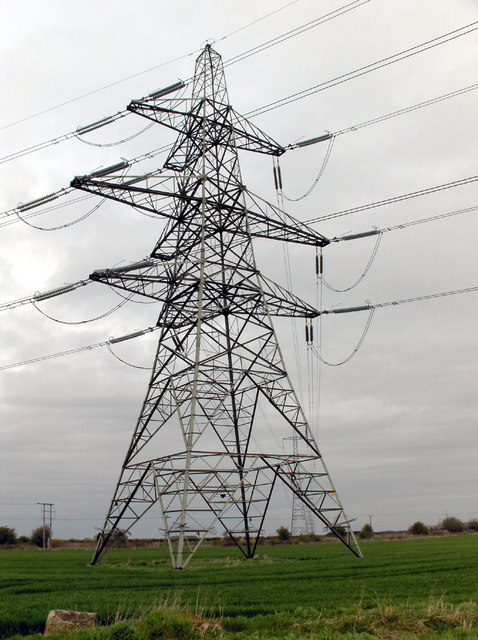
                hmmm.. thought pylons could only hurt you if you had a kite... damn public information films
                Fave replies from various threads

                1: What the fff is all that about??? All that crap below your reply I mean, get a life mate
                2: no info on google abt the pace sv5 rang asda they have no idea what i was talking about,
                3: Your total contribution to this forum, bordering on trolling, seems to have been a collection of snipes, one liners & asterisked expletives


                Comment

                • barrowmanandrew
                  V.I.P. Member
                  • Nov 2009
                  • 3427

                  #38
                  on a serious note.

                  i reckon a piece of wire not in an electrical circuit would weigh the same as an identical piece of wire in a circuit with an electrical current running through it...

                  Comment

                  • Shady
                    Shite Link King
                    • Dec 2010
                    • 6404

                    #39
                    thats a test that can easily be carried out...
                    Fave replies from various threads

                    1: What the fff is all that about??? All that crap below your reply I mean, get a life mate
                    2: no info on google abt the pace sv5 rang asda they have no idea what i was talking about,
                    3: Your total contribution to this forum, bordering on trolling, seems to have been a collection of snipes, one liners & asterisked expletives


                    Comment

                    • RedSpider
                      DK Veteran
                      • Feb 2009
                      • 2448

                      #40
                      leccy must be heavy since lightning falls from the sky rather than floating away
                      Syntax Error : Integer Out Of Range


                      Hooray For Tits & Fannies

                      Comment

                      • rp1210a
                        DK Veteran
                        • Aug 2009
                        • 293

                        #41
                        Now thats thats all clear..how about
                        electron vs current flow? (waiting for the flame war)

                        This one has a more definative answer and should be laid to rest shortly....i hope

                        Comment

                        • TheCoder
                          DK Veteran
                          • Jun 2011
                          • 693

                          #42
                          Originally posted by RedSpider
                          leccy must be heavy since lightning falls from the sky rather than floating away
                          Thought i'd covered that one earlier but lightening actually initiates from a ground point and moves upwards towards the positively charged cloud. The flash you see is the current vapourisng air molecules as the discharge occurs through the already ionised path created by the initial up-strike.

                          Comment

                          • grizzlygaz
                            Junior Member
                            • Nov 2009
                            • 21

                            #43
                            Originally posted by TheCoder
                            Yes, but remember that the conductor is already 'full' of electrons. By pushing more in at one end you simply cause more to fall out of the other end so no mass change in the actual conductor.

                            [quote[However, if there is a 'charge' on a conductor, then there is an imbalance, a conductor can either have a larger amount of Electrons making it negatively charged, or a smaller amount of electrons making it positively charged.
                            No, there is no real change in the actual conductor. It neither gains or loses electrons. If it did then the nature of the material itself would change. Remember atoms of a particular material have a fixed number of components. Change that number and you have a different material. The charge comes only from the potential of the charge source - the conductor is simply a transfer medium.


                            Yes, but thats not really relevent in this context. The conductor itself has no inherant potential difference of its own. The conductor is simply the conduit through which charge can easily flow.


                            Thats true. Without imbalances every point would be identical to every other point which would, in effect, be a total stasis. Not even time or gravity could exist in such a situation,


                            Very true. The term insulator is actually a relative term. If you generate a big enough potential then any material can be made to conduct electricity


                            Yes, but dont mistake the conductors themselves for current sources. The conductors are simply conduits through which electrical potential can be chanelled. The potentials themselves still must have a 'source' and its only that source that gives the imbalance. The conductors are actually unchanged by the process - the number of elecrons within any particular conductor remains constant.


                            True enough, but not really relevant.


                            No, because as I mentioned earlier the actual conductor itself does not change its inherant characteristics. The number of electrons it contains remains constant. If the number of electrons were to change then the Atoms could not remain as copper (or whatever else its made of) and very strange things would start to occur.


                            No, you cannot gain electrons simply by heating. Ultimately, heating a solid conductor would convert it to a gaseous phase which would tend to inhibit its power carrying capabilites. Generally, a material is a material. You can neither add or remove electrons from that material without fundamentlly altering that material.


                            Yes, but again you need to differentiate between a conductor and a charge source. A conductor is a conductor, nothing more. Its function is to provide a low resistance path between the charge source and ground.

                            Charge sources are entirely different beasts. Within a charge source some process (usually chemical but possibly nuclear, static or photovoltaic) is causing material to be changed from one form to another and thus produciing either a deficit or abundance of electrons. Note that nothing is actually being created. Molecules are simply being re-arranged to produce different compounds which just happens to result in a lack/surpluss of electrons and thus electrical charge.


                            Yes, very true, but your describing a charge source there, not a conductor. By there very nature, charge sources go through a change to accumulate charge. Conductors do no such thing.[/QUOTE]


                            I said the conductor remains at neutral, because the electrons just move through it (cascade). However a 'charged material' can hold more electrons:

                            see here: Electric charge and Coulomb's law

                            or: Welcome to Mrs. O's Homepage - Science Department - Grade 9 Unit 4 Notes

                            or alternatively:
                            How are atoms charged?


                            Regarding heat and extra electrons, quote:
                            'When a solid is heated up, the atoms in it move around. This means that the electron clouds will not be in the same place all the time, and sometimes an atom's nucleus will "get in the way" of the electrons streaming through the conductor. Also, if an atom is heated up, it can hold more electrons for a longer period of time before sending the extra electron or electrons away and continuing the electrical flow'.

                            for the above see here: Why does heat make the electrical system less efficient?

                            What the above means is that heated material tends to want to hold onto electrons, and actually 'gathers them' increasing in number and is harder to make the electrons move from the atoms, hence the conductive property of the material becomes poor.
                            Last edited by grizzlygaz; 27 June, 2011, 20:28.

                            Comment

                            • RedSpider
                              DK Veteran
                              • Feb 2009
                              • 2448

                              #44
                              man alive, coder.... you know how to kill jokes don't ya
                              Syntax Error : Integer Out Of Range


                              Hooray For Tits & Fannies

                              Comment

                              • TheCoder
                                DK Veteran
                                • Jun 2011
                                • 693

                                #45
                                Originally posted by grizzlygaz
                                I said the conductor remains at neutral, because the electrons just move through it (cascade). However a 'charged material' can hold more electrons:

                                see here: Electric charge and Coulomb's law

                                or: Welcome to Mrs. O's Homepage - Science Department - Grade 9 Unit 4 Notes

                                or alternatively:
                                How are atoms charged?
                                Yes, by the very nature of things something that is 'charged' will hold more electrons. Charge is, after all a surplus (or deficit) of electrons. The point is the fact the conducter neither gains or loses electrons so, in itself, remains completely without charge. From that point of view (in relation to the initial question) it cannot change its mass.


                                Regarding heat and extra electrons, quote:
                                'When a solid is heated up, the atoms in it move around. This means that the electron clouds will not be in the same place all the time, and sometimes an atom's nucleus will "get in the way" of the electrons streaming through the conductor. Also, if an atom is heated up, it can hold more electrons for a longer period of time before sending the extra electron or electrons away and continuing the electrical flow'.

                                for the above see here: Why does heat make the electrical system less efficient?

                                What the above means is that heated material tends to want to hold onto electrons, and actually 'gathers them' increasing in number and is harder to make the electrons move from the atoms, hence the conductive property of the material becomes poor.
                                Yes and no

                                Whilst what you describe is accurate I dont think its complete. There are other factors that come into play which tend to limit any accumulation of electrons (and hence charge) within a pure conductor. The process described above is actually more about material 'resistance' than charge accumulation.

                                Basically, for charge to accumulate in any object then it has to cease functioning as a conductor and start behaving as a charge generator. Whilst heat may cause that your unlikely to see any effects until near vapourisation point, by which point the material will of ceased being a true conducter anyway.

                                Of course there are materials that behave very differently from conductors. Semicionductors for instance, can easily be fabricated that have either positive or negative temperature coefficients thus their 'conductivity' can be controlled by temperature alone.

                                Comment

                                Working...